
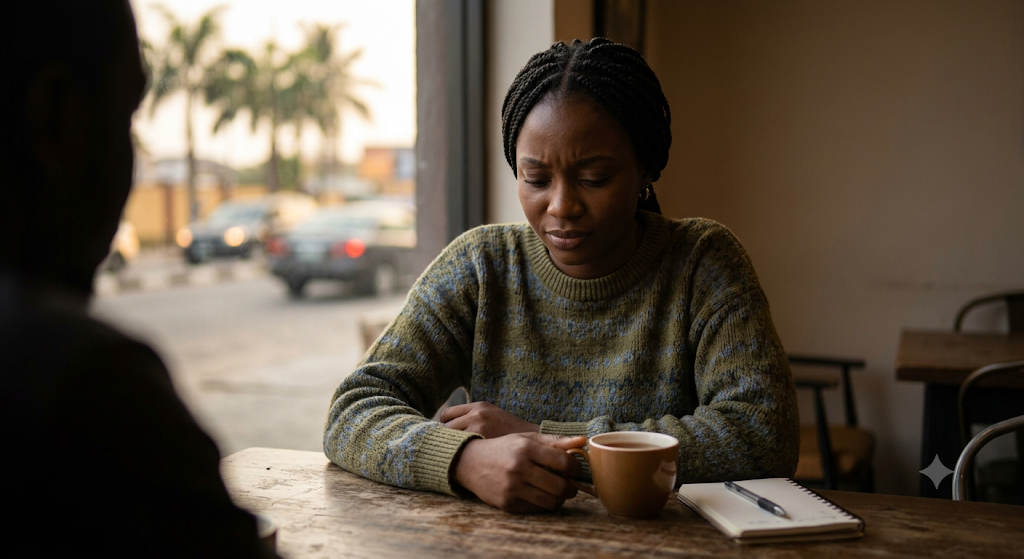
Have you ever sat across from someone as they shared a story, heartbroken, earnest, and completely convinced of every word, only to find out later that the reality was entirely different?
It’s a painful place to be. You want to validate their feelings, but you also realize how easily we all fall into the same trap.
When a relationship turns sour, whether with a close friend, a partner, or a colleague, our natural instinct isn’t to seek neutral ground. It’s to protect ourselves. We tell two-dimensional stories. We paint ourselves as the well-meaning victim and project the other person as the antagonist. It isn’t always done out of malice, sometimes it’s just the Adamic nature in us trying to make sense of our hurt, or sub-consciously trying to get even. We share our side, and then we share their side… strictly through our own lens.
My sister once told me something that completely shifted how I view conflict: There are always three sides to every story my side, their side, and the actual truth.
When we break down that first side how I see it, it’s never purely objective. It’s colored by everything we carry: past traumas, current emotional exhaustion, or even how much time has passed. If you ask me to recount a fight ten minutes after it happened, you’ll get raw anger. Ask me three months later, and reflection might have softened the edges, or reinforced the walls.
Then comes the second side: how I perceive them. We fill in the gaps of their intentions using our own insecurities. If someone goes quiet, we don’t think “they’re overwhelmed”; we think “they’re ignoring me.”
Reflecting on this has forced me to pause before reacting. Now, whenever a narrative is presented to me, I try to hold space for a few uncomfortable questions:
- What if this was said about me, and it’s true?
- What if this was said about me, and it’s entirely false?
- What if this is just an innocent misunderstanding driven by hurt?
- Or, what if there really is mischief and an intent to deceive?
Navigating human connections requires constant discernment. But realizing that none of us hold a monopoly on the absolute truth is the first step toward real empathy—and far less regret.
Join the Conversation
Have you ever had a moment where time or reflection completely changed how you viewed a past conflict? I’d love to hear your perspective, leave a comment below!